
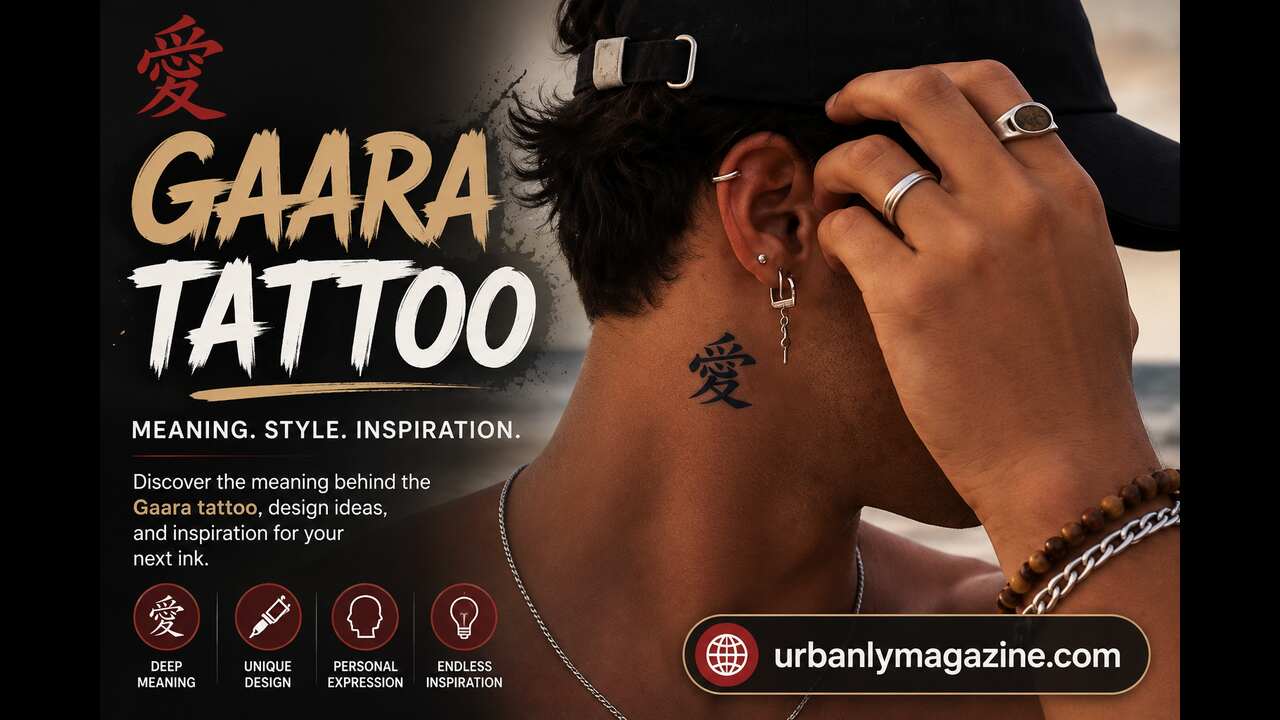
Anime tattoos have moved well beyond niche fan culture. Walk into any reputable street shop today and you’ll find portfolios full of Naruto-inspired work, and one character shows up again and again: Gaara. If you’re thinking about getting a Gaara tattoo, you’re joining a long line of fans who wanted more than a portrait they wanted a piece that says something about who they are.
This guide covers what a Gaara tattoo actually represents, the most popular design styles, where to place it on your body, what it costs, and how to talk to your tattoo artist so you get a result you’ll still love in ten years.
Who Is Gaara, and Why Do People Get His Tattoo?
Gaara is a character from Masashi Kishimoto’s Naruto and Naruto Shippuden. He starts the series as one of the most feared antagonists in the Hidden Sand Village a jinchūriki carrying the tailed beast Shukaku, raised in isolation, and shaped by an assassination attempt ordered by his own father. That backstory turns him into a withdrawn, dangerous kid who equates love with violence.
What makes Gaara resonate isn’t the villain arc. It’s what happens after. Through his encounters with Naruto Uzumaki, Gaara reevaluates what strength and connection actually mean, and he goes on to become the Fifth Kazekage, one of the most respected leaders in the entire series.
That transformation from someone defined by pain and rage to someone who protects the people who once feared him is the reason his tattoo has staying power. It’s rarely just “I like this show.” It’s usually tied to something personal: getting through depression, escaping a harmful environment, learning to trust people again, or simply refusing to let a difficult childhood define an entire life.
The Core Symbolism Behind a Gaara Tattoo
If you’re deciding whether this design fits you, it helps to know what people are actually referencing when they get it:
- The “Love” kanji (愛) on his forehead: Originally meant to represent his mother’s love and his own capacity to love, though it initially reads as a mark of a killer who “loves only himself.” The meaning flips as the character grows, which is exactly why so many people choose this element specifically.
- Sand and the gourd he carries: His signature weapon and defense mechanism, tied to his sand manipulation ability and his instinct to keep people at a distance.
- Shukaku, the One-Tail: The tanuki-like tailed beast sealed inside him, often used in larger, more aggressive back or sleeve pieces.
- The Kazekage robe and hat: A symbol of the redemption arc, showing Gaara as a leader rather than a weapon.
- His eyes: Heavily lined with dark rings from years of insomnia (he couldn’t sleep without risking losing control of Shukaku), making his eyes one of the most recognizable and frequently tattooed features on their own.
Understanding these elements matters because a good Gaara tattoo usually isn’t a random screenshot copied onto skin. It’s built around one or two of these symbols and executed with intention.
Popular Gaara Tattoo Styles
Anime tattoos have matured a lot as an art form, and Gaara’s design lends itself to several distinct approaches. Here’s how most people are getting it done.
1. Black and Grey Realism
This is currently the most requested style for serious anime portrait work. Artists render Gaara’s face often just from the eyes up, or a close crop showing the kanji and the eye rings using heavy shading and smooth gradients rather than flat color. It reads as moody and mature, closer to fine art than fan art, which is part of why it photographs so well and ages well over time.
2. Traditional and Neo-Traditional
Bold linework, a limited but punchy color palette (typically red for the kanji, sand tones, and black outlines), and a more graphic, illustrative feel. This style holds up better long-term than fine-line realism because thick black outlines resist blurring as skin ages. It’s a strong pick if you want the tattoo to still look sharp at 50.
3. Anime/Manga Line Art
A flatter, more direct reproduction of Kishimoto’s original art or the anime’s official character design. Clean linework, cel-shaded color blocking, minimal gradients. This style is popular for smaller pieces forearm, calf, or shoulder where fine detail from a realism piece would blur out over time anyway.
4. Minimalist and Single-Line Design
Instead of a full portrait, many people are opting for a simplified take: just the kanji character, a small sand gourd icon, or a single-line sketch of Gaara’s silhouette. These are common first tattoos or additions to an existing sleeve, and they’re significantly cheaper and faster to sit for.
5. Watercolor and Splash Effects
Less common but growing, especially for pieces built around sand artists use warm ochre and rust tones bleeding outward from a linework base to suggest sand dispersing, which fits Gaara’s ability thematically.
Best Placement Ideas for a Gaara Tattoo
Placement affects size, detail level, healing time, and how visible the tattoo will be day to day. Here’s how the most common choices break down.
Forearm
The most requested spot for anime portraits in general. It’s visible when you want it to be and easy to cover with a sleeve when you don’t. A forearm gives enough surface area for a detailed face or upper-body piece without needing a full sleeve commitment.
Upper Arm and Shoulder
Good for larger single-subject pieces, like a bust portrait with the Kazekage robe or a scene incorporating Shukaku in the background. The curve of the shoulder also works well for a wraparound sand-and-gourd design.
Back Piece
If you want the full character sand swirling around him, Shukaku looming behind, the Kazekage insignia included the back gives artists the real estate to do it justice. This is a bigger financial and time commitment, usually done in multiple sessions.
Calf and Thigh
Increasingly popular because the flatter, larger surface holds fine line work well, and it’s easy to keep private for work environments with visible-tattoo restrictions.
Small and Discreet Spots
For the kanji alone or a tiny sand icon, common placements include:
- Behind the ear
- Wrist or inner forearm
- Ankle
- Ribcage
- Back of the neck
These smaller placements are ideal if this is your first tattoo, if you want something meaningful but subtle, or if you’re planning to add more Naruto-themed pieces later and want to start small.
How Much Does a Gaara Tattoo Cost?
Pricing varies heavily by region, studio reputation, and artist experience, but here’s a realistic general range in the U.S. as of 2026:
- Small minimalist design (kanji only, small icon): $80–$200, often a flat rate
- Medium detailed piece (portrait, forearm-sized): $250–$600
- Large black and grey realism piece (half sleeve or larger): $800–$2,000+, typically billed hourly at $120–$250/hour
- Full back piece with multiple elements: $2,000–$5,000+, usually spread across several sessions
Realism and neo-traditional work generally cost more than flat line art because of the shading time involved. It’s worth paying more for an artist who specializes in portrait or anime work rather than choosing the cheapest option botched facial proportions are one of the most common regrets with anime tattoos, and fixing or covering a bad one costs more than doing it right the first time.
Choosing the Right Artist for an Anime Tattoo
Not every skilled tattoo artist is good at anime-style work specifically, so vet accordingly.
- Check their portfolio for anime pieces specifically. Not just realism or traditional work in general. Faces from anime have distinct proportions larger eyes, simplified nose and mouth lines and an artist used to realistic human portraits can accidentally make the piece look “off.”
- Ask how they handle fine detail aging. A good artist will tell you honestly if a design is too detailed for the placement you want and suggest simplifying it.
- Look at healed photos, not just fresh ones. Fresh tattoos always look sharp. Healed work ideally six months to a year later tells you how the piece will actually hold up.
- Bring reference images, but be open to adaptation. Bringing three or four reference angles of Gaara (screenshots, official art, fan art you like) gives the artist more to work with than a single image, and lets them adapt the design to fit your chosen placement properly.
Design Tips for a Gaara Tattoo That Lasts
A few practical notes that make a real difference over time:
- Avoid excessive fine detail on areas with a lot of movement or sun exposure. Like hands or the inside of the elbow these fade and blur faster than flatter areas like the outer forearm or thigh.
- Bold outlines age better than soft gradient-only work. If longevity matters to you more than photorealism, ask your artist to incorporate stronger linework even within a black and grey piece.
- Red ink (commonly used for the kanji) fades faster than black. Some artists recommend a slightly darker or more saturated red than you’d expect at first, because it lightens with healing and sun exposure over the years.
- Plan for touch-ups. Even well-done tattoos, especially color and fine-detail ones, often need a touch-up session 6–12 months after healing.
FAQs About Gaara Tattoos
What does the kanji on Gaara’s forehead actually mean? It’s the Japanese character 愛 (ai), meaning “love.” It was carved into his forehead as an infant, tied to his mother Karura’s dying wish, though for most of his early life Gaara interprets it as a mark of someone who loves only himself and kills without hesitation. The meaning shifts as his character develops.
Is a Gaara tattoo considered a “villain tattoo”? Not really. While Gaara starts as an antagonist, the character is best known for his redemption arc and eventual role as Kazekage. Most people getting this tattoo are referencing his growth and resilience, not his early villain era specifically.
What’s the most popular Gaara tattoo design? Black and grey realism portraits focused on the eyes and forehead kanji are currently the most requested version, followed closely by neo-traditional pieces with the sand gourd and red kanji accent.
Does a Gaara tattoo hurt more in certain placements? Pain varies by person, but generally: forearms and calves are more tolerable, while ribs, inner arms, and areas closer to bone (ankle, spine, behind the ear) tend to be more painful. A detailed portrait piece also means longer sitting time, which adds to overall discomfort regardless of placement.
Can I get just the kanji without a portrait of Gaara? Yes, and it’s one of the more common minimalist choices. A standalone 愛 kanji in red or black ink is a subtle way to reference the character without committing to a full portrait.
How long does a Gaara tattoo take to complete? A small minimalist piece can be done in under an hour. A detailed forearm portrait typically takes 3–5 hours in a single session. Larger back or sleeve pieces incorporating Shukaku or multiple scenes are usually split across 2–4 sessions of 3+ hours each.
Will a Gaara tattoo look dated in a few years? Anime tattoos as a category are well past being a passing trend at this point the style has an established place in modern tattoo culture, similar to Japanese traditional or neo-traditional work. A well-executed piece, particularly in black and grey or bold neo-traditional style, will hold up the same way any quality portrait tattoo does.
Final Thoughts
A Gaara tattoo works because the character’s arc gives it real weight it’s rarely just fan art, it’s usually a marker of getting through something hard and coming out the other side different. Whether you go with a full black and grey portrait, a bold neo-traditional gourd-and-sand piece, or just the kanji on its own, the design choices above should give you a solid starting point for a conversation with your artist.
Take your time picking someone who actually specializes in anime or portrait work, be honest with yourself about placement and long-term fading, and bring solid reference material to your consultation. Done well, this is a tattoo that ages as gracefully as the character’s own story does.
Read interesting Information About Blogs, Entertainment At: urbanlymagazine.com