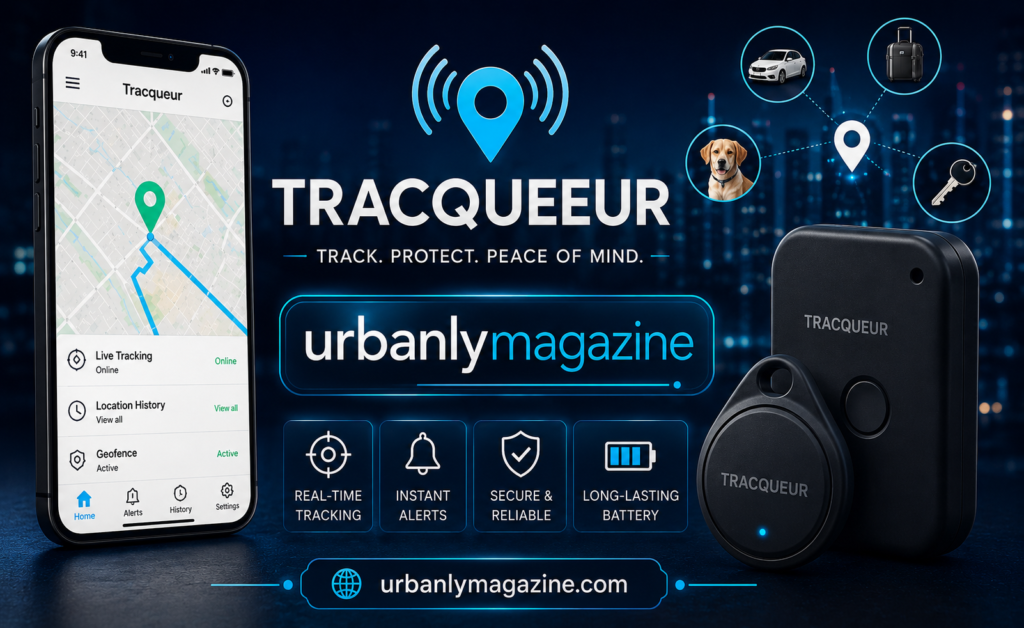
Losing something important is one of the most frustrating everyday experiences. Whether it’s your car keys before a busy morning, a backpack left behind on campus, or a suitcase that never shows up on the baggage carousel, that moment of panic is universal. Instead of retracing your steps or hoping a stranger returns your belongings, a tracqueur (tracking device) gives you a faster, more reliable way to find what matters.
A tracqueur is a compact smart device built to locate people, pets, vehicles, and personal belongings in real time. By pairing with a mobile app, it lets you check the exact position of a tracked item within seconds, turning what used to be a stressful search into a quick glance at your phone. As the technology has become smaller, cheaper, and more privacy-conscious, it has moved from a niche gadget into something households and businesses rely on every day.
By 2026, tracking devices have become a standard part of how people manage safety and logistics. Parents attach them to backpacks and coats to keep tabs on their kids, pet owners use them to monitor wandering dogs and cats, frequent flyers slip them into checked luggage, and companies use fleet-grade trackers to manage vehicles, equipment, and shipments.
This guide walks through everything you need to know before buying a tracqueur: how the technology works, the different types on the market, what features actually matter, how to set one up, and how to use it without crossing any privacy lines.
What Is a Tracqueur?
The word “tracqueur” comes from French and simply translates to “tracker” in English. Today it’s used broadly to describe any small electronic device that reports its location or the location of whatever it’s attached to a connected app. Whether it’s monitoring a moving vehicle, a wandering pet, or a misplaced wallet, the underlying idea is the same: give the owner real-time visibility into where their belongings are.
Take air travel as an example. A traveler can drop a small tracqueur into a checked bag before a flight. Instead of waiting anxiously at the carousel, While many humans observe the single tracker using GPS technology, modern surveillance devices create snapshots with unique views. Some rely on GPS for unique outdoor terrain they can open an app and see exactly where the suitcase is still in transit, sitting on the tarmac, or already on its way to baggage claim. If a bag is delayed or misrouted, that visibility makes recovering it far easier.
The same logic applies elsewhere. Parents use trackers to feel more confident about a child’s daily commute. Dog owners use them to locate a pet that’s slipped out of the yard. Warehouses and logistics companies use them to keep tabs on expensive equipment and inventory. The devices themselves vary, but the goal is consistent: more visibility, less anxiety, and faster recovery when something goes missing.
While GPS is the technology most people associate with tracking, modern devices often use several methods together GPS, Bluetooth, Wi-Fi, and cellular networks depending on where and how the tracker is meant to be used.
How Does a Tracqueur Work?
Even though the underlying hardware can be complex, using a tracqueur is simple from the user’s side. Behind the scenes, the process happens in three stages: location detection, data transmission, and result display.
Step 1: Location Detection. Most trackers rely on GPS satellites to pinpoint their position outdoors. In areas where satellite signals are weak indoors, underground, or in dense urban environments devices often supplement GPS with Bluetooth, Wi-Fi, or nearby cell towers to maintain accuracy.
Step 2: Data Transmission. Once a location is captured, the device sends that data to the cloud using a cellular connection, Wi-Fi, or a Bluetooth link to a paired phone. This is what allows the information to reach your app almost instantly.
Step 3: Result Display. The companion app translates the raw data into something useful usually a pin on a live map. Many apps refresh automatically, so the tracked item’s location updates in near real time without you having to do anything.
Going back to the luggage example, a good app doesn’t just show a dot on a map it can tell you whether the bag has been checked in, loaded, or is now moving toward the arrivals hall, removing a lot of the uncertainty that comes with travel.
Beyond basic location tracking, many devices offer extra features: movement history, geofencing (a virtual boundary that triggers an alert when crossed), and instant notifications the moment a tracked item leaves a defined area. These added capabilities are what separate a basic tracker from a genuinely useful safety tool.
The Technology Behind Tracqueur Devices
A tracqueur typically blends several technologies to balance accuracy, range, and battery life.
GPS (Global Positioning System): Communicates with orbiting satellites to calculate location with high precision. It performs best outdoors and is the standard choice for tracking cars, motorcycles, pets, shipping containers, and anything that travels long distances.
Bluetooth: Is the go-to technology for short-range tracking. Bluetooth trackers are small, energy-efficient, and commonly clipped to keychains, wallets, backpacks, and remote controls. Because their range is limited to roughly 100–300 feet, they’re ideal for locating items around the house or office rather than across a city. Many also include a built-in speaker that lets you trigger a sound to find a nearby item.
Wi-Fi-based tracking: Shines indoors, where GPS signals are often too weak to be useful. Airports, shopping malls, hospitals, and large office buildings frequently use Wi-Fi positioning to pinpoint devices with much better indoor accuracy than GPS alone.
Cellular networks (GSM, 4G, LTE, and 5G): Allow a tracker to send updates over long distances without relying on a paired phone nearby. This makes cellular-enabled trackers the preferred option for vehicle monitoring, fleet management, and logistics.
Smart sensors: In premium devices can detect motion, vibration, temperature changes, or sudden impacts, sending an alert the moment something unusual happens useful for catching theft, tampering, or unauthorized movement early.
Combined, these technologies let a modern tracqueur adapt to almost any environment, indoors or out, short-range or long-distance.
Types of Tracqueur Devices
Not every tracker is built the same way the right choice depends on exactly what you’re trying to keep tabs on.
Vehicle Trackers
Installed in cars, motorcycles, vans, or entire commercial fleets, vehicle trackers report location in real time and help with theft recovery, route optimization, and driver behavior monitoring. Businesses often use these systems fleet-wide to cut fuel costs and improve overall efficiency.
Personal Trackers
Designed with human safety in mind, personal trackers are popular among families with young children, elderly parents, or family members with special care needs. Many models include an SOS button that instantly alerts a caregiver or emergency contact.
Pet Trackers
Clipped to a collar, pet trackers let owners monitor a dog or cat’s whereabouts through a mobile app. If a pet slips out of the yard or wanders off during a walk, continuous location updates make it much easier to find them quickly.
Item Trackers
Small and lightweight, item trackers are made for everyday belongings bags, wallets, keys, cameras, and laptops. They’re easy to slip into a pocket or attach to a zipper, and they’re one of the most effective tools for recovering things that go missing around the house or while traveling.
Fitness and Activity Trackers
Worn on the wrist, fitness trackers focus less on location and more on health metrics steps taken, workout duration, heart rate, sleep quality, and calories burned. They’re grouped under the broader tracker category because they continuously collect and analyze personal data, much like location-based devices.
How to Choose the Right Tracqueur
The right tracqueur depends entirely on what you need to monitor.
If you’re tracking something that covers long distances a car, a motorcycle, a dog that roams a GPS tracker with cellular connectivity is usually the better choice, since it can report location almost anywhere. For everyday items like keys, wallets, or bags that stay close to you, a Bluetooth tracker is a cheaper and perfectly adequate option.
Battery life: Matters more than most buyers expect. Some compact trackers need charging every few days, while others run for weeks or even months on a single charge. Matching battery life to how you’ll actually use the device saves a lot of maintenance hassle.
Location accuracy: Should be checked before buying. A reliable tracqueur should update position with minimal delay, whether it’s being used indoors or outdoors. Reading real-world reviews is a good way to gauge how a device performs outside of marketing claims.
Extra safety features: Motion alerts, geofencing, location history, and SOS buttons can add real value, especially for families and business owners. Check whether these features are included by default or locked behind a premium subscription.
Total cost of ownership: Is worth calculating up front. Many trackers have a one-time purchase price, but GPS models with cellular connectivity often require a monthly subscription for continuous tracking. Factor that into your budget before you commit to a device.
How to Set Up a Tracqueur
Most modern trackers are designed for a quick, mostly hands-off setup.
- Charge the device fully: Before first use, following the manufacturer’s instructions.
- Check the connectivity requirements; Some GPS trackers need an active SIM card for cellular service, while Bluetooth models simply pair directly with your phone.
- Download the companion app: From your device’s app store and create an account.
- Pair the tracker: By scanning a QR code, entering an activation code, or following the in-app pairing steps.
- Test the connection: By moving the tracker a short distance away and confirming that the app’s map updates correctly.
- Customize your settings: Set up geofenced safe zones, enable real-time alerts, add emergency contacts, and adjust notification preferences to fit how you’ll use the device.
Setup generally requires little to no technical knowledge, and most people can have a tracker fully configured and working within a few minutes.
Tracqueur Security and Privacy
Used responsibly, trackers are genuinely valuable safety tools but privacy has to stay part of the conversation. In many regions, using a tracking device on a person or their property without consent can violate local privacy laws and carry legal consequences. Before using any tracker, it’s worth understanding the rules in your area and making sure you have proper consent from anyone being tracked.
Protecting your own data matters just as much. Stick to trackers from reputable manufacturers that offer encrypted communication, regular firmware updates, and secure companion apps. Simple habits strong passwords, two-factor authentication where available, and keeping firmware updated go a long way toward keeping your account secure.
Many newer trackers also include anti-stalking protections, which can detect unknown tracking devices moving with you and alert you if one is found. These built-in safeguards help reduce misuse and give users more confidence in the technology overall.
Used thoughtfully, and paired with good digital security habits, a tracqueur can deliver real peace of mind without compromising anyone’s privacy.
The Future of Tracqueur Technology
Tracking technology keeps getting smarter, smaller, and more efficient. As connectivity and artificial intelligence continue to advance, the next generation of tracqueur devices is expected to offer even greater accuracy and automation.
Artificial intelligence: Is already changing how trackers operate. Rather than simply reporting a location, AI-powered systems can recognize movement patterns, flag unusual behavior, and send proactive alerts before a problem escalates improving safety for individuals, households, and businesses alike.
Battery technology: Continues to improve as manufacturers develop more power-efficient hardware, allowing devices to run longer between charges a major benefit for travelers, fleet managers, and anyone who depends on continuous tracking.
Indoor positioning: Is another area of rapid progress. Advances in Wi-Fi, Bluetooth, and ultra-wideband (UWB) technology are making it easier to pinpoint items inside large spaces like airports, warehouses, and office buildings, where traditional GPS often struggles.
Looking further ahead, trackers are expected to integrate more deeply with smart homes, connected vehicles, and smart city infrastructure communicating with security cameras, home automation systems, and emergency services to enable faster, more coordinated responses in critical situations.
As the technology matures, tracqueur devices are evolving from simple location tools into comprehensive safety systems designed to prevent problems before they happen.
FAQs
1. Why use a tracqueur? A tracqueur gives you real-time visibility into the location of valuable belongings, vehicles, pets, or people. Depending on the model, it can help prevent loss, improve safety, and deliver near-instant location updates through a mobile app.
2. Do I need GPS for a tracqueur to work? Not necessarily. While many trackers rely on GPS for outdoor tracking, others use Bluetooth, Wi-Fi, or cellular networks instead. The right technology depends on your use case Bluetooth is great for nearby items, while GPS is better suited to long-distance tracking.
3. Can I use a tracqueur without a monthly subscription? Yes, in many cases especially with Bluetooth-based trackers, which typically don’t require a subscription. GPS trackers that rely on cellular networks, however, often need a monthly plan to enable continuous, real-time updates.
4. Is it legal and safe to use a tracqueur? Yes, when used responsibly and with proper consent. Tracking your own belongings, vehicle, or pet is generally fine, but tracking another person without their knowledge or consent can violate privacy laws in many places, so it’s worth checking local regulations first.
5. What should I consider before buying a tracqueur? Look at tracking method (GPS vs. Bluetooth), battery life, location accuracy, app compatibility, geofencing features, real-time alerts, subscription costs, and the manufacturer’s overall reliability before making a purchase.
Conclusion
A tracqueur has become far more than a simple gadget for finding lost items. It’s a practical, discreet tool that gives people real confidence about the safety and location of what matters most cars, luggage, pets, or valuables through features like real-time tracking, motion alerts, and smart notifications.
As the technology continues to improve, tracqueur devices are becoming more affordable, more accurate, and more accessible to everyday users and businesses alike. Understanding the different types, the technology behind them, and what to look for before buying puts you in a strong position to choose the device that actually fits your needs.
Whether you’re protecting personal belongings, keeping an eye on a pet, managing a fleet of vehicles, or simply trying to avoid the stress of losing something important, a well-chosen tracqueur is a smart, practical investment and one that keeps getting better as the technology evolves.
Read intresting Information About Blogs, Entertainment At: urbanlymagazine.com