
Introduction
If you’ve typed “best salmorejo near me” into a search bar recently, you’re not alone. This velvety, chilled tomato soup from Córdoba has been quietly taking over brunch menus, tapas bars, and summer supper clubs across the UK and US. It’s thicker, richer, and more indulgent than its famous cousin gazpacho, and once people try it properly made, they tend to go looking for it again and again. Whether you’re in London, Manchester, New York, or Los Angeles, tracking down a genuinely authentic bowl isn’t always straightforward plenty of places serve a thinned-out imitation. This guide will help you understand exactly what you should be looking for, how to evaluate a restaurant’s version, and how to make a stellar salmorejo yourself when the search for “best salmorejo near me” comes up empty.
What Is Salmorejo? Understanding the Dish Before You Order It
Before you can judge whether a restaurant serves the best salmorejo near you, it helps to know what you’re actually looking for. Salmorejo is a cold, blended soup that originated in Córdoba, in the Andalusia region of southern Spain. Unlike gazpacho, which is a lighter vegetable-forward soup, salmorejo is built around a much simpler, denser base.
Traditional salmorejo typically contains just four core ingredients:
- Ripe tomatoes: The star of the dish, blended until completely smooth.
- Stale bread: Soaked and blended in, giving the soup its signature thick, almost mousse-like texture.
- Olive oil: Good-quality Spanish extra virgin olive oil, emulsified slowly into the mixture.
- Garlic and salt: Used sparingly, just enough to round out the flavour.
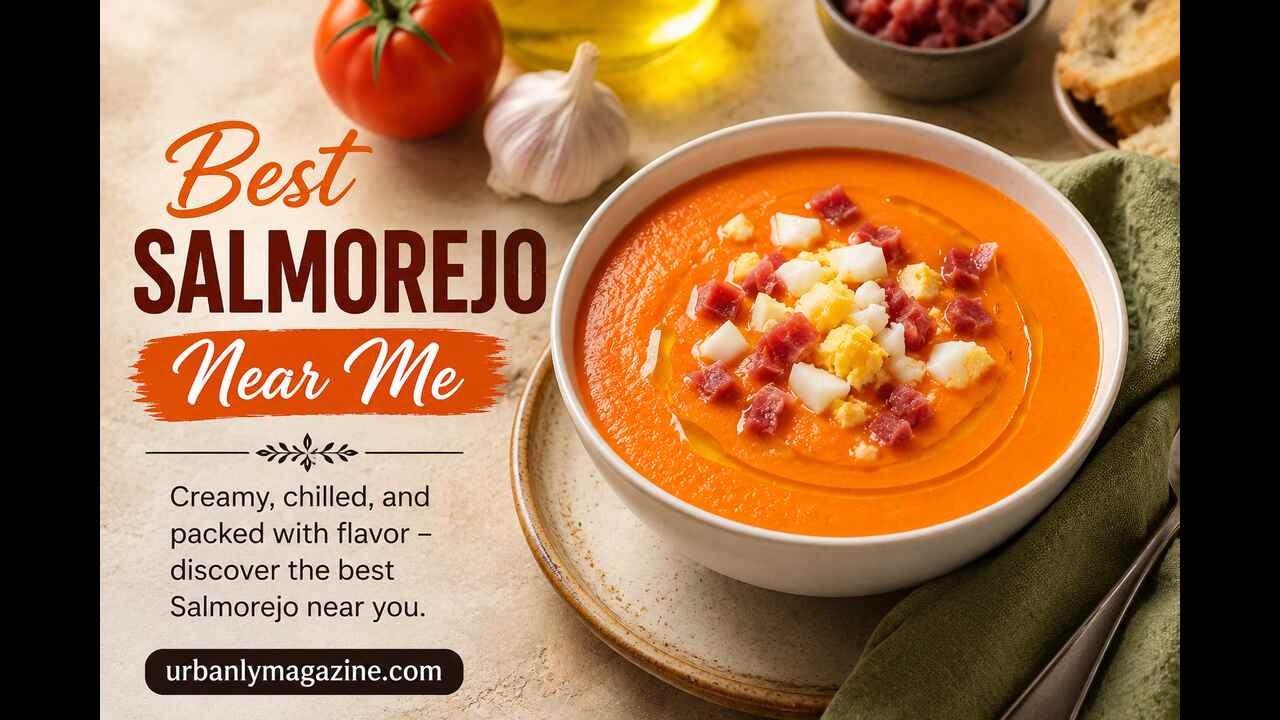
The result is a soup with the texture of a thick smoothie or a savoury custard, usually served in a small bowl or glass and topped with chopped hard-boiled egg and diced jamón (cured Spanish ham). A drizzle of olive oil on top is non-negotiable for anyone who takes the dish seriously.
Here’s why this matters when you’re searching: many restaurants in the UK and US serve a version that’s really just gazpacho with a fancier name thin, watery, and missing the bread entirely. If a menu describes salmorejo as “a light tomato soup,” that’s often a red flag. The best salmorejo should coat the back of a spoon and feel substantial, almost like a savoury mousse.
How to Find the Best Salmorejo Near Me: Practical Tips for UK and US Diners
Once you know what authentic salmorejo should taste and look like, finding it becomes much easier. Here’s how to approach the search.
Start with Spanish-owned or Andalusian-focused restaurants. Generic “tapas” chains often standardise their menus and cut corners on labour-intensive dishes like proper salmorejo. Independent Spanish restaurants, particularly those run by chefs from southern Spain, are far more likely to make it the traditional way.
Check the toppings listed on the menu. If a dish labelled salmorejo doesn’t mention chopped egg and jamón (or at least jamón or egg), it may be a simplified or Americanised version. That’s not necessarily bad, but it’s worth knowing before you order.
Look at texture in photos and reviews. Customer photos on review platforms are one of the most reliable ways to vet a dish before visiting. Authentic salmorejo should look thick and opaque, almost coral-pink, not translucent or soupy.
Ask about seasonality. The best salmorejo is made with ripe, in-season tomatoes, which means quality can vary through the year. Restaurants that only serve it in summer, when tomatoes are at their peak, are often signalling that they care about doing it properly.
Search neighbourhood-specific terms. Instead of a broad search, try combining your search with your specific area for example, “salmorejo Notting Hill” or “salmorejo Brooklyn.” Hyperlocal searches tend to surface smaller, independent restaurants that larger review aggregators sometimes bury.
If you’re building out a wider Spanish food itinerary, it’s worth pairing your salmorejo hunt with a broader tapas crawl check out Urbanly Magazine’s guide to the best tapas bars for more inspiration on where to eat next, and don’t miss our feature on essential Spanish pantry staples if you want to recreate the flavours at home.
Salmorejo vs Gazpacho: Why the Difference Matters When Ordering
One of the most common reasons people struggle to find “the best salmorejo near me” is that salmorejo and gazpacho get conflated constantly on English-language menus and understanding the difference will instantly improve how you order.
Texture: Is the biggest distinction. Gazpacho is a thin, drinkable soup, closer to a spicy vegetable juice. Salmorejo, thanks to its bread content, is thick enough to eat with a spoon and often feels closer to a dip or a mousse.
Ingredients: Also diverge significantly. Gazpacho usually includes cucumber, bell peppers, onion, and vinegar alongside tomatoes, giving it a brighter, more acidic profile. Salmorejo strips things back to tomato, bread, garlic, and olive oil, which produces a rounder, creamier, less acidic flavour.
Serving style: Differs too. Gazpacho is often served in a tall glass as a starter or even a palate cleanser. Salmorejo is typically served in a shallow bowl, finished with egg and jamón, and eaten more slowly as its own course.
Culinary experts and Spanish food writers increasingly point to salmorejo as the dish to watch in the UK and US food scene over the next few years, largely because it photographs beautifully, fits comfortably into the wider trend toward Mediterranean and Andalusian cuisine, and offers something more substantial than gazpacho for diners looking for a proper starter. Restaurants that get this distinction right and market salmorejo as its own dish rather than “gazpacho’s cousin” tend to be the ones worth seeking out.
Conclusion
Finding the best salmorejo near you comes down to knowing what authentic salmorejo actually is, recognising the telltale signs of a properly made version thick texture, chopped egg, jamón, quality olive oil and being willing to search a little more specifically than a generic query. Whether you’re dining out in London, New York, or anywhere in between, or deciding to make it yourself with ripe summer tomatoes and good bread, understanding the real deal will transform how you experience this Andalusian classic. Ready to keep exploring Spanish cuisine? Browse more of Urbanly Magazine’s food guides for the best tapas spots, regional Spanish recipes, and insider tips on eating well wherever you are.
Read interesting Information About Blogs, Entertainment At: urbanlymagazine.com