
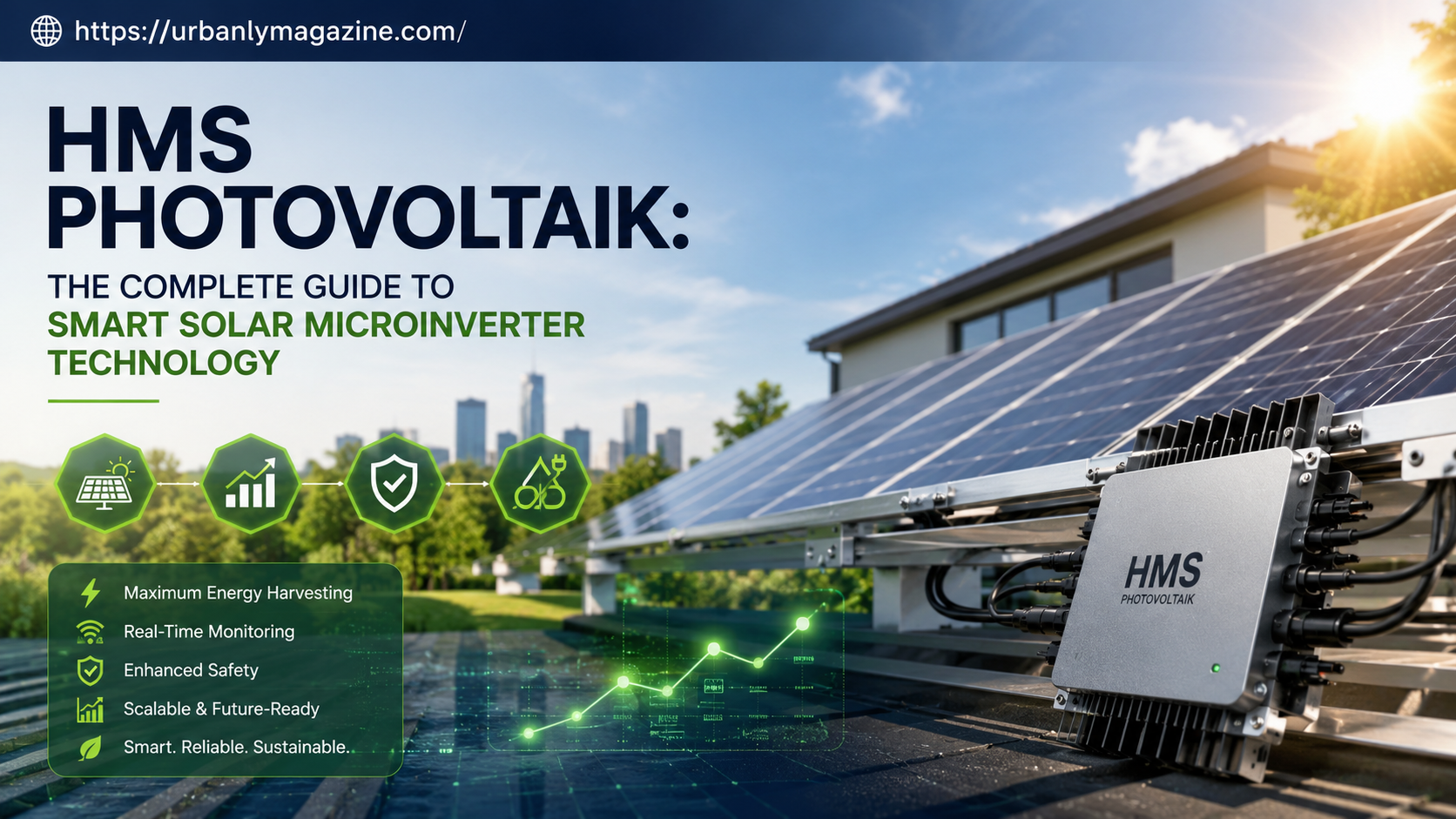
As homeowners and businesses look for dependable ways to cut their reliance on the traditional power grid and lower monthly energy bills, demand for flexible, sustainable energy systems keeps climbing. Solar technology has advanced enormously in recent years, making HMS Photovoltaik systems greener, more adaptable, and far easier to install than they once were. Today, even small residential rooftops, apartment balconies, and compact urban spaces can generate meaningful amounts of renewable electricity when paired with the right equipment.
One of the technologies driving this shift is HMS Photovoltaik, a modern solar solution built around advanced microinverter engineering. Unlike conventional setups that depend on a single, expensive central inverter, HMS-based systems let every solar panel operate on its own. This distributed design boosts energy output, strengthens overall system reliability, and keeps performance steady even when some panels are shaded or receiving uneven sunlight.
Whether you’re planning a full rooftop installation, expanding an existing solar array, or setting up a compact balcony solar kit, understanding how HMS Photovoltaik works will help you make a more informed decision. This guide walks through the core concepts, technical advantages, installation process, and common pitfalls associated with this increasingly popular approach to efficient solar energy.
Understanding the Basics of HMS Photovoltaik
To appreciate what makes HMS Photovoltaik different, it helps to first understand how conventional solar power systems operate. In most traditional residential installations, solar panels are wired together in a series known as a “string.” The direct current (DC) electricity generated by the panels travels through this string before reaching a single central inverter, where it’s converted into the alternating current (AC) that homes actually use.
This approach has been the industry standard for decades, but it carries one significant drawback: because every panel in the string is electrically linked, the output of the entire string is limited by its weakest-performing panel. If even one panel is covered by shade, dust, fallen leaves, or debris, the power output of the whole string can drop meaning homeowners lose energy production even when the rest of their panels are getting full sun.
How HMS Photovoltaik Technology Works
HMS Photovoltaik solves this problem through microinverter technology, which allows each solar panel to function independently. Rather than relying on one central inverter, a small microinverter is mounted directly beneath or beside each individual solar module. This distributed setup converts the DC power from every panel into AC power right at the source.
Because each panel works independently, a drop in performance from one module no longer drags down the rest of the system. If a single panel is partially shaded during part of the day, the remaining panels keep producing at their full potential. This panel-level independence leads to higher overall energy yield, greater system reliability, and better use of available sunlight throughout the day.
By removing the performance bottlenecks that come with traditional string inverters, HMS Photovoltaik offers a more efficient and adaptable solar solution one that’s well suited to residential rooftops, balcony solar setups, and small commercial installations alike.
Step 1: Solar Panels Generate DC Electricity
The process begins when sunlight strikes the photovoltaic (PV) cells inside each solar panel. These cells convert sunlight into direct current (DC) electricity the raw form of power initially produced by any solar module.
In an HMS Photovoltaik system, this DC current travels only a short distance to a microinverter positioned near the panel. Because the power is processed almost immediately, there’s no need to send high-voltage DC electricity over long cable runs, which reduces energy losses and improves the overall reliability of the system.
Step 2: Independent Maximum Power Point Tracking (MPPT)
One of the standout features of HMS Photovoltaik is Maximum Power Point Tracking, or MPPT. Each microinverter continuously monitors the voltage and current coming from its connected panel and automatically adjusts operating conditions to squeeze out the maximum possible efficiency.
Unlike string inverter systems, where all panels are tied to one set of operating conditions, HMS technology lets every panel be optimized on its own. So if one panel experiences shading, dirt buildup, or a temporary performance dip, the other panels continue operating at peak efficiency, unaffected.
Many modern HMS microinverters include dual MPPT channels, allowing a single unit to independently manage two solar panels at once. This adds flexibility to system design while still delivering strong, consistent energy performance across the array.
Step 3: Converting DC Power to AC Power
Once the microinverter has optimized each panel’s output through MPPT, it immediately converts the DC electricity into AC power. Since homes and businesses run on AC electricity to power lights, appliances, and electronics, this conversion step is essential to any solar setup.
Because the conversion happens at each individual panel rather than at one central point, the system runs more efficiently overall and avoids the energy losses that can occur when DC electricity has to travel long distances before being converted.
Step 4: Powering Your Home
After conversion, the AC electricity flows through your home’s wiring to the main distribution panel, where it powers everyday devices lighting, televisions, computers, refrigerators, air conditioning units, and more.
If your solar system generates more electricity than your household needs at a given moment, the surplus can often be exported back to the utility grid, depending on local regulations and your grid connection agreement. This helps maximize the financial return on your solar investment and improves the overall efficiency of the installation.
The Technological Advantages of HMS Photovoltaik
HMS Photovoltaik systems are engineered to enhance energy production, improve equipment reliability, and deliver strong long-term performance. As solar panels themselves become more powerful and homeowners expect higher standards from their equipment, microinverters need to keep pace. The HMS series is built with exactly these demands in mind supporting high-output solar modules with rugged hardware designed to withstand real-world outdoor conditions.
Reliable Wireless Communication for Continuous Monitoring
Dependable communication is essential for monitoring how well a solar installation is performing. Earlier generations of microinverters often relied on standard Wi-Fi, which can struggle outdoors roofing materials, concrete walls, insulation, and other structural barriers frequently weaken Wi-Fi signals, making it hard to get consistent, real-time performance data.
HMS microinverters address this by using sub-1GHz wireless communication, a frequency band specifically chosen for stronger signal penetration over longer distances. Compared to standard Wi-Fi frequencies, these lower-frequency signals pass through building materials more effectively, resulting in faster, more dependable communication between the microinverters and the monitoring system.
Performance data from each microinverter is collected by a Data Transfer Unit (DTU), which then relays that information to a monitoring platform. This gives users a central place to track energy production, quickly spot potential issues, and review the performance of individual panels across the entire array.
Built for High-Power Solar Panels
Solar panel technology has advanced significantly in recent years, with manufacturers producing larger, more efficient modules capable of generating more power than ever. To take full advantage of these higher-output panels, an inverter needs to be able to handle the increased current without becoming a bottleneck.
The HMS series is designed to support high-input-current solar modules, making it a strong match for today’s high-wattage panels. This compatibility allows homeowners and installers to pair HMS microinverters with the latest solar technology while maintaining excellent conversion efficiency.
By accommodating higher current levels, HMS Photovoltaik systems help maximize electricity generation and reduce the risk of energy loss that can occur when an inverter’s capacity doesn’t match the output of modern solar panels making it a practical, future-ready choice as panel technology continues to improve.
Strong Compatibility with Modern Solar Technologies
Another advantage of the HMS series is its versatility across different types of photovoltaic modules. In addition to supporting standard solar panels, many HMS microinverters are also compatible with high-efficiency and bifacial modules, which can generate power from both the front and back of the panel under the right installation conditions.
This broad compatibility gives installers more freedom when designing a system, allowing them to choose the solar panels best suited to a residential, commercial, or balcony solar project without sacrificing performance.
Step-by-Step Guide to Installing an HMS Photovoltaik System
HMS Photovoltaik installations are designed to be efficient and adaptable, making them a good fit for residential rooftops, balcony solar kits, and small business installations. While the modular design simplifies the process, working with a licensed solar professional is strongly recommended to ensure safe, code-compliant results.
1. Evaluate the Installation Site
A successful solar installation starts with choosing the right location for the panels. Before installing anything, survey the property to identify areas that receive consistent sunlight throughout the day. Take note of nearby buildings, trees, chimneys, or other structures that could cast shadows and reduce output.
Orientation matters too. In many regions, south-facing installations capture the most sunlight over the course of a year, though east-west configurations can also work well particularly for households that use more electricity in the morning or evening.
Panel angle is another important factor. A moderate tilt typically provides balanced energy production year-round, while steeper angles common with balcony mounting systems can offer better performance during winter months when the sun sits lower in the sky.
2. Securely Install the Mounting Structure
Once the site is prepared, the mounting hardware is firmly attached to the roof, wall, ground frame, or balcony railing using corrosion-resistant fasteners rated for outdoor use.
Because solar panels are exposed to wind, rain, and shifting weather for years at a time, the mounting system needs to provide solid structural support. Properly installed rails and brackets keep the panels secure while protecting both the equipment and the building itself.
Once the mounting frame is complete, the solar modules are carefully positioned on the rails and secured with manufacturer-approved clamps and fasteners. Precise alignment at this stage helps extend the lifespan of the entire system.
3. Connect the Solar Panels to HMS Microinverters
Each HMS microinverter is mounted beneath or beside its assigned solar panel. This panel-level design allows every module to operate independently while contributing to optimized power output across the whole array.
DC cables from each solar panel connect to weatherproof input ports on the microinverter. These connectors are built to maintain a stable electrical connection while protecting the system from moisture, dust, and other environmental exposure.
Careful cable routing and secure connector placement are critical here they play a big role in electrical safety and long-term system reliability.
4. Integrate the System with the Home’s AC Electrical Network
Once the DC connections are complete, each microinverter converts its panel’s electricity into AC power that can run household appliances and electronics.
The AC output from every microinverter feeds into the system’s dedicated AC wiring, which then connects to the property’s main electrical distribution panel. Depending on system design, local codes, and installation requirements, the solar array may connect through a dedicated circuit or another approved grid-tie method.
All grid connections should meet applicable electrical codes and be completed by a qualified, licensed installer to ensure safe, compliant operation.
5. Test, Monitor, and Commission the System
Before the system goes into regular use, a thorough inspection should confirm that every mechanical and electrical component has been installed correctly. This includes checking cable connections, mounting hardware, grounding, and communication between the microinverters and the monitoring platform.
Once commissioned, homeowners can view the real-time performance of individual panels through the HMS monitoring platform. This visibility makes it easier to catch potential issues early, plan preventive maintenance, and track daily, monthly, and annual energy production.
Common Installation Mistakes to Avoid with HMS Photovoltaik
HMS Photovoltaik systems are built for reliable, straightforward installation, but even small mistakes can affect monitoring accuracy, reduce energy output, or shorten the system’s lifespan. Keeping the following points in mind will help ensure your solar investment performs well for years to come.
Place the Data Transfer Unit (DTU) Correctly
The DTU’s main job is to collect performance data from every microinverter and relay it to the monitoring platform. To maintain a stable connection, it should be installed somewhere with consistent wireless signal strength.
While HMS systems use a low-frequency wireless protocol that generally performs well over distance and through typical building materials, signal quality can still suffer in difficult environments think enclosed metal cabinets, basements, or areas surrounded by heavy structural material.
For the best results, install the DTU in an open indoor space with minimal physical obstruction between it and the solar array. Positioning it near a window, or along a clear line of sight to the panels, helps ensure consistent, uninterrupted monitoring.
Organize and Protect Power Cables
Proper cable management is a critical part of any solar installation. Cables that aren’t properly secured can suffer wear from constant movement, friction, wind, or prolonged sun exposure.
During installation, all DC and AC cables should be carefully routed along the mounting structure and secured using UV-resistant cable ties, approved clamps, or other weatherproof hardware designed for outdoor use. This reduces mechanical stress on connectors and results in a safer, more professional installation.
Good cable management also makes future maintenance and troubleshooting far easier, since connections stay accessible and easy to trace.
Follow Local Electrical Codes and Manufacturer Guidelines
Every HMS Photovoltaik installation should follow the manufacturer’s technical specifications alongside local electrical codes. Proper equipment placement, secure mounting, correct grounding, and compliant wiring all contribute to a safer, more reliable, longer-lasting system.
For any installation that connects to the utility grid, work with a certified solar installer or licensed electrician who’s familiar with local codes and safety requirements.
FAQs: HMS Photovoltaik
1. What is HMS Photovoltaik, and how does it work? HMS Photovoltaik is a solar energy solution that uses microinverter technology to let each solar panel operate independently. Every panel converts its own DC power to AC power at the panel level, which increases overall output especially when some panels are affected by shading or uneven sunlight.
2. What are the main benefits of an HMS Photovoltaik system? HMS Photovoltaik systems offer improved energy efficiency, stronger reliability, real-time panel-level monitoring, and better overall performance compared to traditional string inverter setups, since each panel can operate at its own optimal level.
3. Is HMS Photovoltaik a good fit for residential properties? Yes. HMS Photovoltaik works well for residential rooftops, balcony solar setups, apartments, and small commercial properties. Its modular design makes installation flexible and allows homeowners to expand their system later if they need more energy capacity.
4. Does shading on one panel affect the performance of the whole system? No. Because every panel has its own microinverter, shading or dirt on one panel has minimal impact on the rest of the array the other panels keep operating normally at full capacity.
5. How can homeowners keep their HMS Photovoltaik system running efficiently? Regularly cleaning the solar panels, checking electrical connections, monitoring performance through the platform, and scheduling periodic inspections by a certified technician all help maintain strong performance and extend the system’s lifespan.
Final Thoughts: HMS Photovoltaik
HMS Photovoltaik represents a modern approach to solar energy, combining advanced microinverter technology with smart, real-time energy management. Unlike traditional solar designs, it allows every panel to operate independently boosting energy production, minimizing the impact of shading, and improving overall system reliability. These qualities make it a strong option for homeowners, businesses, and anyone looking to get more value from a solar investment.
As solar technology continues to evolve, choosing a system built around strong performance, flexible configuration, and real-time monitoring can make a real difference in long-term results. Whether you’re installing a brand-new photovoltaic system or upgrading an existing one, HMS Photovoltaik is worth serious consideration.
Before starting any solar project, take time to assess your property’s energy needs, choose quality components, and work with experienced professionals familiar with local regulations. With careful planning, proper installation, and regular maintenance, an HMS Photovoltaik system can deliver strong performance and lasting value for years to come.
Read interesting Information About Blogs, Entertainment At: urbanlymagazine.com